Recursos compartidos por Safe Water for Every Child Myanmar
Safe Water for Every Child Myanmar aims to empower communities to test water quality, and access and maintain clean drinking water for better health.
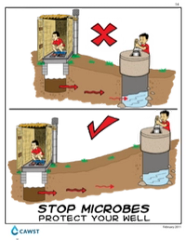
Proteja su pozo
Mantenga su pozo seguro al colocar la letrina cuesta abajo y lejos de su pozo.
Idiomas
Inglés
Español
Criollo haitiano
Francés
Suajili
Portugués (Brasil)
Birmano
Lenguas karénicas
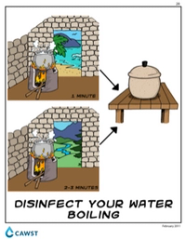
Introduction to Household Water Treatment and Safe Storage Presentation
This presentation is for use with the Introduction for Household Water Treatment and Safe Storage, and is broken up in to Day 1, 2, and 3.
Idiomas
Birmano
Lenguas karénicas
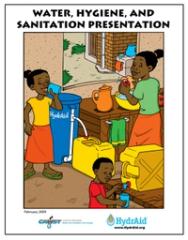
HydrAid Water, Sanitation and Hygiene Poster Set
This poster presentation can be used as a participatory learning tool by Community Health Promoters (CHP) in a variety of situations to: • Teach about safe water, hygiene and sanitation practices in general; • Introduce new household water treatment technologies; • Train people how to operate and maintain their household water treatment technology; and • Reinforce messages about household water treatment, hygiene and sanitation on a return visit to a household.
Idiomas
Sin texto
Inglés
Birmano
Lenguas karénicas
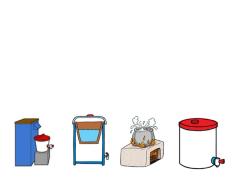
Introducción al tratamiento de agua a nivel domiciliario y almacenamiento seguro (TANDAS)
This technical brief introduces and defines household water treatment and safe storage (HWTS). It describes how HWTS systems fit within a multi-barrier approach to safe drinking water. It also discusses the benefits and limitations of HWTS.
Idiomas
Francés
Español
Inglés
Birmano
Lenguas karénicas
Acerca de CAWST
CAWST es una organización canadiense sin fines de lucro y una firma de ingeniería autorizada en Canadá. Trabajamos para responder a la necesidad mundial de contar con agua segura y saneamiento, mediante el fortalecimiento y el desarrollo de habilidades y conocimientos locales, para que las personas puedan implementar por sí mismas soluciones a nivel del hogar.