Safe Chlorination of Drinking Water
Use the materials in this collection when facilitating and in-person Chlorination for Safe Drinking Water Workshop.
This collection includes a workshop training manual, participant workbook, as well as many other resources for both facilitators and participants.
Topics
Co-developed with
Languages
Arabic•Bahasa•English•French•Portuguese (Brazil)•Spanish
Technical briefs, fact sheets, e-learning modules and other reference materials related to the Chlorination for Safe Drinking Water Workshop.
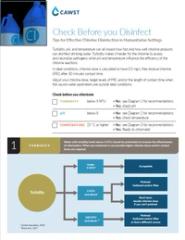
Check Before you Disinfect: Turbidity, pH, and Temperature in Drinking Water Chlorination
Turbidity, pH, and temperature can all impact how fast and how well chlorine products can disinfect drinking water. Use this guide to determine how these parameters will affect your chlorine dosage and contact time.
How to Make a 1% Chlorine Solution
Follow this guide to prepare a 1% chlorine solution that can be used for the Modified Horrock's Test and disinfection of the water supply.
Calculate your Chlorine Dose: Modified Horrocks' Test Instructions
This guide provides instructions for conducting the Modified Horrocks Test. This test is used to determine the effective chlorine dose for batch chlorination of drinking water.
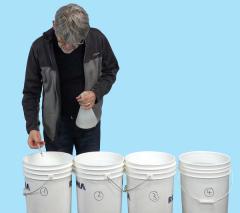
Using the Modified Horrocks' Test to Calculate effective Chlorine Dosage
The Modified Horrocks' Test is a method of calculating the correct chlorine dosage for a known quantity of water. Follow along with Peter Thomson, senior director at CAWST as he conducts the Horrcks' test to calculate the correct chlorine dosage for a batch of drinking water.

Chlorine Calculator
Use this calculator to determine the chlorine needed for disinfecting wells, drinking water, and storage tanks. Read instructions before use.
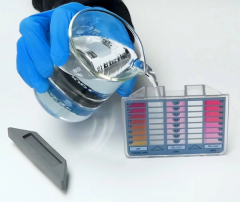
Pooltester User Guide
This guide provides instructions on the correct use of a pooltester kit to measure pH, free residual chlorine (FRC) and total chlorine (TC).
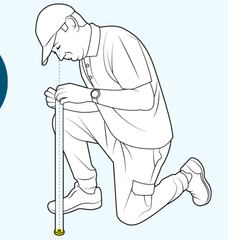
How to Measure Turbidity Using a Turbidity Tube
Step-by-step instructions for using a turbidity tube to measure how cloudy water is and determine if pre-treatment may be needed before disinfection.
Turbidity Tube Product Sheet
This product sheet has a product description, distributor information, availability, cost, storage, and maintenance information about turbidity tubes.
Store Chlorine Products Safely!
Follow the guidelines in this poster to store and transport chlorine products safely. This poster is ideal for printing and placing in any location where chlorine products are handled and stored.

Handle Chlorine Products Safely!
Follow the guidelines in this poster to handle and use chlorine products safely. This poster is ideal for printing and placing in any location where chlorine products are handled and stored.
Delivering Effective WASH Training - Trainer Essentials
This is a package of all the trainer essentials used in the Delivering Effective WASH Training Workshop.

The Multibarrier Approach to Safe Drinking Water
How do you prevent and treat contaminated drinking water? Learn about the multi-barrier approach to ensure that water is safe to drink.
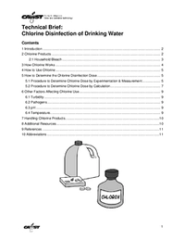
Chlorine Disinfection of Household Drinking Water
This technical brief describes different types of chlorine products available for household water disinfection, and how chlorine inactivates microorganisms in water. It provides guidelines for chlorine use, including safety considerations and methods for calculating appropriate doses.
Check Before you Disinfect: Batch Chlorination Scenario
Turbidity, pH, and temperature can all impact how fast and how well chlorine products can disinfect drinking water. Challenge yourself as you manage a water delivery at a humanitarian camp; select and evaluate the required water parameter tests and learn how these parameters can affect chlorine dosage and contact time.
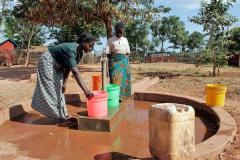
Using the Modified Horrocks' Test to Calculate effective Chlorine Dosage
The Modified Horrocks' Test is a method of calculating the correct chlorine dosage for a known quantity of water. Follow along with Peter Thomson, senior director at CAWST as he conducts the Horrcks' test to calculate the correct chlorine dosage for a batch of drinking water.
Chlorine Dose Calculator: Batch Chlorination of Drinking Water
Use this calculator to determine the amount of chlorine to prepare a 1% chlorine solution and the amount of the 1% solution required to disinfect a batch of drinking water.
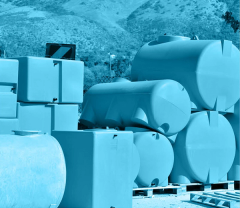
Chlorine Dose Calculator: Shock Chlorination of Tanks
Use this Excel calculator to determine the amount of chlorine required to disinfect storage tanks and tankers through shock chlorination. This method is recommended for new tanks or when there is evidence of microbial contamination.
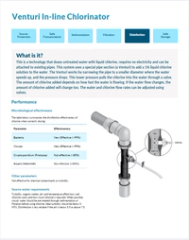
Venturi Inline Chlorinator Fact Sheet
This fact sheet describes disinfection of drinking water using a Venturi inline chlorinator.
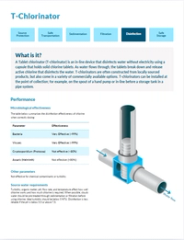
T-Chlorinator Fact Sheet
This fact sheet describes disinfection of drinking water using a T-Chlorinator.
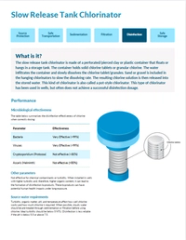
Slow Release Tank Chlorinator Fact Sheet
This fact sheet describes disinfection of drinking water using a Slow Release Tank Chlorinator.
Selecting Household Water Treatment and Safe Storage (HWTS) Options
This technical brief gives some steps you can follow to identify, evaluate, and test household water treatment and safe storage (HWTS) options with your potential user group. It describes criteria you can use to assess the appropriateness of different HWTS options for your context. It also explains why HWTS selection should take place within a multi-barrier approach to safe drinking water.
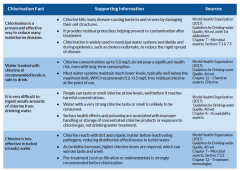
Facts: Chlorine Disinfection for Safe Drinking Water
A fact sheet debunking common fears about chlorinated drinking water, backed by WHO guidance — for WASH trainers, educators, and community promoters.